
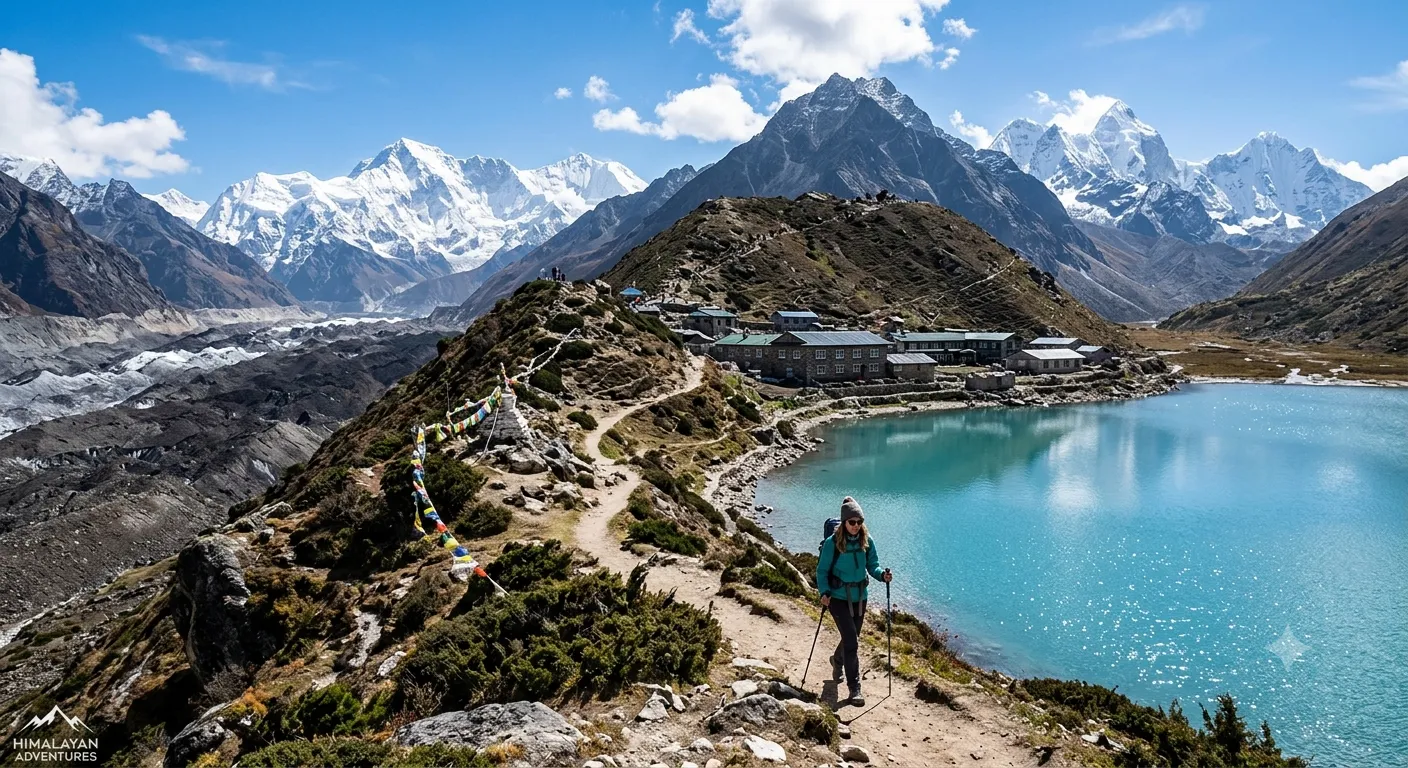
The scenic Gokyo Valley trekking trail is one of the most beautiful and rewarding routes in the Everest region of Nepal. Known for its turquoise glacial lakes, peaceful Sherpa villages, dramatic mountain scenery, and panoramic viewpoints, this trek offers an unforgettable alternative to the busier routes of the Himalayas. For travelers who want to experience the natural beauty of the Everest region while enjoying a quieter atmosphere, Gokyo Valley is an outstanding choice.
Unlike routes that focus mainly on reaching a single destination, the Gokyo journey offers remarkable scenery throughout the trek. From forested paths and suspension bridges to high-altitude valleys and sparkling lakes, every section reveals a different side of the Himalayas. The opportunity to climb Gokyo Ri and admire some of the world’s highest mountains makes the adventure even more special.
Why Choose the Scenic Gokyo Valley Trekking Trail?
The scenic Gokyo Valley trekking trail attracts trekkers because of its exceptional combination of mountain views, cultural experiences, and glacial landscapes. While the Everest region is famous worldwide, Gokyo Valley often feels more peaceful than the main Everest Base Camp route.
One of the greatest highlights is the series of magnificent Gokyo Lakes. Their clear blue and turquoise waters create a striking contrast with the surrounding rocky terrain and snow-covered peaks. These high-altitude lakes are among the most memorable natural attractions in the region.
The trail also offers views of famous Himalayan giants, including Mount Everest, Cho Oyu, Lhotse, and Makalu. Seeing these enormous peaks from a high viewpoint is an experience that remains with trekkers long after the journey ends.
The Journey Through the Everest Region
Most Gokyo Valley adventures begin with a journey to Lukla, a well-known gateway to the Everest region. From there, trekkers follow mountain paths through traditional settlements and beautiful natural landscapes. The early stages of the trek usually pass through villages such as Phakding before continuing toward Namche Bazaar.
Namche Bazaar is an important center for trekkers and local communities. Surrounded by steep mountain slopes, this lively settlement offers lodges, shops, bakeries, and impressive viewpoints. It is also a valuable place for acclimatization before moving toward higher elevations.
After leaving Namche, the route gradually separates from the main trail used by many Everest Base Camp trekkers. The path continues toward quieter settlements and increasingly remote landscapes. As the elevation rises, forests become thinner and the environment changes into open alpine terrain.
The Beauty of Gokyo Lakes
The Gokyo Lakes are the heart of the scenic Gokyo Valley trekking trail. These glacial lakes are famous for their remarkable colors and dramatic surroundings. On clear days, the calm water reflects nearby mountains and the vast Himalayan sky.
Reaching the lakes after several days of trekking is a deeply rewarding moment. The scenery feels remote, powerful, and peaceful. Trekkers can spend time exploring the area, taking photographs, and appreciating the extraordinary high-altitude environment.
The village of Gokyo is located beside one of the main lakes. Despite its remote setting, it provides accommodation and basic facilities for visitors. Staying beside the turquoise water with snowy peaks in the distance is one of the defining experiences of the trek.
Climbing Gokyo Ri for Panoramic Views
A major highlight of the journey is the climb to Gokyo Ri. This viewpoint rises above the valley and offers one of the finest panoramas in the Everest region. The ascent can be physically demanding because of the altitude, but the reward is exceptional.
From the top, trekkers can enjoy sweeping views of Mount Everest and several other major Himalayan peaks. The massive Ngozumpa Glacier, one of the most impressive glacial features in the region, can also be seen stretching across the landscape.
Many trekkers begin the climb early in the morning to enjoy clear conditions and soft light over the mountains. Watching sunlight gradually illuminate the snowy summits creates a remarkable Himalayan scene.
Sherpa Culture Along the Route
The scenic Gokyo Valley trekking trail is not only about landscapes. It also provides opportunities to experience the culture and hospitality of Sherpa communities. Villages along the route reflect a way of life shaped by high mountains, Buddhist traditions, and generations of adaptation to the Himalayan environment.
Trekkers may encounter prayer flags, mani walls, monasteries, and traditional stone houses. These cultural features add meaning and character to the journey. Respecting local customs and interacting politely with residents can make the trekking experience more rewarding.
Tea houses along the route provide simple accommodation and meals. They also create welcoming spaces where trekkers from different countries can meet, share stories, and prepare for the next day’s walk.
Best Time for the Gokyo Valley Trek
Spring and autumn are generally considered the most suitable seasons for trekking in Gokyo Valley. Spring, particularly from March to May, often brings moderate conditions and attractive mountain scenery. Autumn, from September to November, is popular for its generally stable weather and clear views.
Winter trekking is possible for experienced and well-prepared travelers, but temperatures can become extremely cold. Snow may also affect trail conditions. The summer monsoon season can bring rain, cloud cover, and slippery paths at lower elevations.
Regardless of the season, mountain weather can change quickly. Proper preparation and a flexible approach are important.
Physical Preparation and Acclimatization
The trek requires good physical fitness, patience, and careful altitude management. Trekkers should prepare with regular walking, hiking, cardiovascular exercise, and strength training before the journey.
Acclimatization is particularly important because the route reaches significant elevations. A sensible itinerary should include gradual ascent and sufficient rest. Trying to move too quickly can increase the risk of altitude-related problems.
Essential equipment includes reliable trekking boots, warm layers, a waterproof jacket, gloves, headwear, sun protection, and a suitable sleeping bag. Packing carefully can improve both comfort and safety.
A Memorable Himalayan Experience
The scenic Gokyo Valley trekking trail is an excellent choice for travelers seeking extraordinary landscapes, high-altitude adventure, and a quieter experience in the Everest region. Its combination of turquoise lakes, enormous glaciers, traditional villages, and panoramic mountain viewpoints creates a journey filled with unforgettable moments.
Panoramic Everest Trekking Route: A Spectacular Journey Through the Himalayas
The panoramic Everest trekking route offers an unforgettable opportunity to explore one of the most beautiful mountain regions in the world. Surrounded by dramatic Himalayan peaks, traditional Sherpa villages, ancient monasteries, and deep river valleys, this journey is ideal for travelers who want to experience the natural and cultural beauty of the Everest region. Every stage of the trek presents remarkable scenery, from green forested trails at lower elevations to vast alpine landscapes surrounded by snow-covered mountains.
Unlike a journey focused only on reaching a single destination, a panoramic trek emphasizes the complete Himalayan experience. Trekkers can enjoy changing landscapes, peaceful settlements, mountain viewpoints, and close encounters with local traditions. The route provides spectacular views of Everest, Lhotse, Ama Dablam, Thamserku, Nuptse, and many other impressive peaks.
Why Choose a Panoramic Everest Trekking Route?
The main attraction of the panoramic Everest trekking route is the extraordinary variety of mountain scenery. The Everest region is home to some of the highest and most recognizable peaks on Earth. As trekkers move through the Khumbu region, the views continually change, creating a fresh perspective at every major viewpoint.
This type of trekking experience is suitable for travelers who appreciate photography, nature, cultural exploration, and high-altitude adventure. Rather than rushing through the mountains, trekkers can follow a carefully planned itinerary that allows enough time to enjoy the surroundings and adjust gradually to increasing elevation.
The journey also provides access to traditional Sherpa communities. Villages, monasteries, prayer wheels, mani walls, and colorful prayer flags add cultural depth to the mountain scenery. This combination of nature and heritage makes the trek much more than a simple walking holiday.
Beginning the Journey in the Everest Region
For many travelers, the adventure begins with a scenic flight to Lukla, one of the best-known gateways to the Everest region. From there, the trail follows beautiful valleys, suspension bridges, small settlements, and forest paths. The early sections of the trek offer a gentle introduction to the Himalayan environment.
The route commonly passes through Phakding before continuing toward Namche Bazaar. Along the way, trekkers cross impressive suspension bridges and walk beside the Dudh Koshi River. Forests of pine and rhododendron create a refreshing atmosphere, while distant mountain views provide an exciting preview of the scenery ahead.
Namche Bazaar is one of the most important stops on the panoramic Everest trekking route. Built on a natural mountainside amphitheater, this lively settlement is a major trading and tourism center in the Khumbu region. It is also an excellent place for acclimatization.
Spectacular Mountain Viewpoints
One of the greatest rewards of trekking in the Everest region is reaching viewpoints that reveal broad Himalayan panoramas. Around Namche Bazaar, trekkers can enjoy impressive views of Everest and neighboring peaks. Clear mornings are especially rewarding, as the mountains often appear sharp against a deep blue sky.
The trail toward Tengboche provides another outstanding scenic experience. Ama Dablam dominates many sections of the landscape with its elegant shape, while Everest, Lhotse, and other peaks rise in the distance. The combination of forested hills, deep valleys, and high mountains creates some of the finest scenery in Nepal.
Depending on the chosen itinerary, trekkers may continue toward higher settlements or follow alternative trails to quieter viewpoints. A well-designed panoramic route can include several scenic locations rather than concentrating on only one famous destination.
Cultural Beauty Along the Trail
The panoramic Everest trekking route is equally valuable for its cultural experiences. The Khumbu region is closely associated with Sherpa heritage and Tibetan Buddhist traditions. Throughout the journey, trekkers encounter monasteries, chortens, prayer flags, and carved stones carrying sacred inscriptions.
Tengboche Monastery is among the most significant cultural landmarks in the region. Its dramatic mountain setting makes it a memorable stop for trekkers. The peaceful atmosphere, traditional architecture, and surrounding Himalayan scenery create a powerful sense of place.
Local teahouses also provide opportunities to experience mountain hospitality. After a day of walking, trekkers can rest, enjoy warm meals, and interact with lodge owners and fellow travelers. These simple moments often become some of the most memorable parts of the journey.
Best Time for the Trek
The most popular seasons for exploring the panoramic Everest trekking route are spring and autumn. Spring, generally from March to May, brings moderate temperatures, colorful rhododendron forests, and excellent mountain scenery. It is a particularly attractive season for nature lovers and photographers.
Autumn, from September to November, is widely appreciated for stable conditions and clear mountain views. After the summer monsoon, the atmosphere is often clean and crisp, creating excellent visibility across the Himalayan ranges.
Winter trekking is also possible for properly prepared travelers, although temperatures can become extremely cold at higher elevations. The monsoon season brings rain, clouds, and slippery trails, so careful planning is essential.
Preparation and Acclimatization
Good preparation is important for any Himalayan journey. Trekkers should build cardiovascular fitness and leg strength before departure. Regular hiking, stair climbing, cycling, and endurance training can help prepare the body for long walking days.
Acclimatization is equally important because the route reaches significant elevations. A sensible itinerary should include gradual ascent, adequate rest, proper hydration, and time for the body to adjust. Trekkers should avoid moving upward too quickly and remain attentive to symptoms related to altitude.
Essential equipment includes comfortable trekking boots, layered clothing, a warm jacket, rain protection, gloves, sunglasses, sun protection, and a suitable sleeping bag. Packing carefully can make the journey safer and more comfortable.
A Memorable Himalayan Adventure
The panoramic Everest trekking route is an exceptional choice for travelers seeking mountain scenery, cultural discovery, and genuine adventure. From the lively atmosphere of Namche Bazaar to peaceful monasteries and sweeping viewpoints, every section of the trail offers something distinctive.
With thoughtful planning, proper acclimatization, and suitable preparation, trekkers can enjoy a rewarding journey through one of the world’s most celebrated mountain regions. The combination of towering peaks, welcoming communities, dramatic landscapes, and centuries-old traditions creates an experience that remains memorable long after the trek ends.
For anyone dreaming of seeing the Himalayas from remarkable viewpoints while discovering the heart of Sherpa country, the panoramic Everest trekking route offers a powerful and inspiring way to experience the beauty of Nepal.
