
Some trails earn fame through crowds. Others earn it through quiet. The Mardi Himal Trek belongs firmly in the second group. Tucked into the eastern side of the Annapurna region, this route climbs through rhododendron forest to an exposed alpine ridge, with Machapuchare (Fishtail) rising so close it feels within arm’s reach.
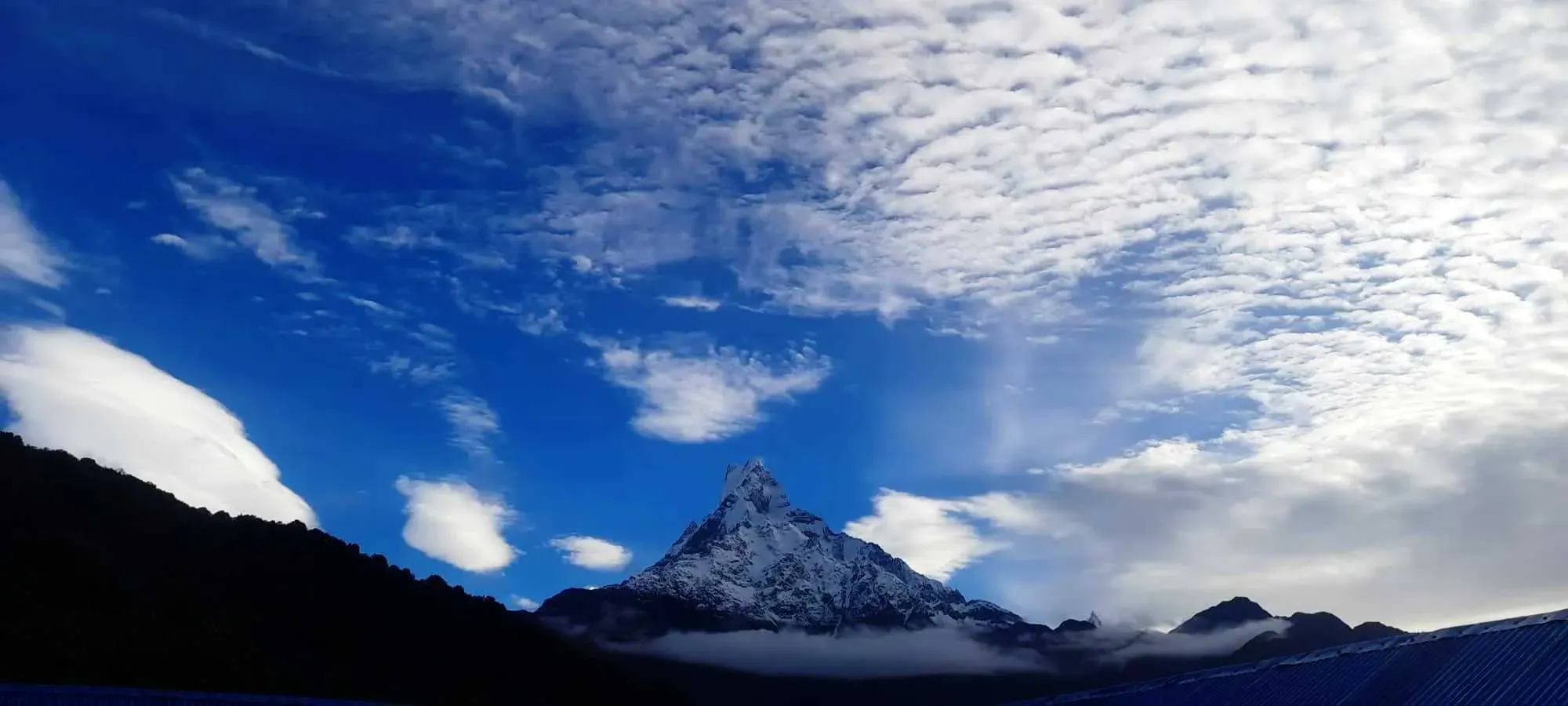
Whether you have a long weekend or a full week, Mardi Himal offers big Himalayan scenery without the logistical weight of the Annapurna Circuit or Everest Base Camp. This guide covers everything you need to plan the trek with confidence.
What Is the Mardi Himal Trek?
The Mardi Himal Trek is a moderate teahouse trek in the Kaski District of Nepal, starting and ending near Pokhara. It follows the ridge below Mardi Himal (5,587 m) and ends at Mardi Himal Base Camp, at roughly 4,500 meters.
The trail was opened to trekkers in the early 2010s, which makes it young compared with Nepal’s classic routes. That youth is part of its appeal. The lodges are simpler, the trail is quieter, and the experience feels closer to the mountains than to a commercial circuit.
Quick facts:
-
Location: Annapurna Conservation Area, Kaski District, Nepal
-
Duration: 5 to 8 days, depending on pace and route
-
Maximum altitude: About 4,500 m (Mardi Himal Base Camp); most trekkers stop at the Upper Viewpoint near 4,200 m
-
Difficulty: Moderate
-
Accommodation: Basic teahouses
-
Starting point: Pokhara (via Kande, Phedi, or Dhampus)
Why Choose Mardi Himal?
Close-up mountain views. The ridge walk is the highlight. From High Camp and the Upper Viewpoint, you get a wide panorama of Annapurna South, Hiunchuli, Annapurna III, Gangapurna, and the sharp pyramid of Machapuchare.
Short and accessible. You can reach Pokhara from Kathmandu by road or a short flight, and the trailhead is a couple of hours from the lakeside. That makes Mardi Himal ideal for travelers with limited time.
Fewer crowds. While popularity has grown in recent years, the trail is still calmer than the Annapurna Base Camp route. You’ll share the ridge with other trekkers, but rarely feel rushed.
Varied landscapes. In one trek you pass through terraced farmland, dense oak and rhododendron forest, open meadow, and high alpine ridge.
Mardi Himal Trek Itinerary
Most trekkers complete the route in five to seven days. Here is a typical seven-day plan with comfortable acclimatization.
Day 1: Pokhara to Kande, then Deurali (about 2,100 m)
After a drive of roughly an hour to Kande or Phedi, the trek begins with a steady climb through village paths and forest. Deurali is a common first overnight stop. Expect around five to six hours of walking, depending on your starting point.
Day 2: Deurali to Forest Camp (about 2,600 m)
The trail enters thick rhododendron and oak forest. In spring, the hillsides are covered in red and pink blooms. The path is steady and often humid, so take your time and stay hydrated.
Day 3: Forest Camp to Low Camp (about 3,050 m)
The landscape slowly opens up as the forest thins. You’ll gain altitude gradually, and views of the peaks begin to appear through gaps in the trees. Low Camp is a modest teahouse settlement where evenings get cold quickly.
Day 4: Low Camp to High Camp (about 3,580 m)
This is one of the most scenic days. You climb onto the exposed ridge, where the forest gives way to grassland and the mountains appear in full. High Camp sits directly beneath the Himalayan wall, making sunset and sunrise here unforgettable.
Day 5: High Camp to Upper Viewpoint and back (about 4,200 m)
Set out before dawn for the Upper Viewpoint, a climb of around three to four hours. The reward is a 360-degree panorama lit by early light. Many trekkers turn back here, then return to High Camp for breakfast and continue down to Low Camp or Forest Camp.
For those with enough time and acclimatization, the extra push to Mardi Himal Base Camp (around 4,500 m) is possible but longer and more demanding.
Day 6: Descend to Siddhing or Sidhing Village
The descent follows a different trail through forest and traditional villages. Legs tend to feel it on this day, so walking poles help.
Day 7: Drive back to Pokhara
A short jeep ride from Siddhing returns you to Pokhara, ready for hot food and a long shower.
Best Time to Do the Mardi Himal Trek
Spring (March to May) is ideal for color. Rhododendrons bloom across the lower forests, temperatures are pleasant, and skies are often clear in the morning.
Autumn (late September to November) offers the most stable weather and the sharpest mountain visibility. It is the busiest season, so book lodging early if possible.
Winter (December to February) is possible but cold, especially near High Camp, where snow and freezing nights are common. Only well-equipped trekkers should attempt it.
Monsoon (June to August) brings heavy rain, leeches in the lower forest, and cloud-covered views. It’s generally best avoided.
Permits and Costs
Trekkers need two permits for the Mardi Himal route:
-
Annapurna Conservation Area Permit (ACAP)
-
TIMS card (Trekkers’ Information Management System), where currently required
Fees and requirements change from time to time, so confirm current rates with the Nepal Tourism Board, a registered trekking agency, or the permit office in Pokhara before you go.
Typical budget (independent trekker): Many trekkers spend roughly USD 25 to 40 per day on food, lodging, and basic needs, excluding transport and permits. Guided or agency-arranged packages cost more but include logistics, a licensed guide, and sometimes a porter.
How Difficult Is the Mardi Himal Trek?
Mardi Himal is rated moderate. You don’t need technical skills, but you do need reasonable fitness. Expect steep, sustained climbs and several hours of walking each day. The altitude is the main challenge, since the trek reaches a height where altitude sickness can affect anyone, regardless of fitness.
To reduce the risk of altitude sickness:
-
Ascend gradually and avoid rushing to High Camp
-
Drink plenty of water throughout the day
-
Avoid alcohol at higher elevations
-
Recognize symptoms early: persistent headache, nausea, dizziness, or unusual fatigue
-
Descend if symptoms worsen, since descent is the most effective treatment
A few weeks of preparation, including hill walking, stair climbing, and cardio, will make the trek much more enjoyable.
Do You Need a Guide?
The trail is well marked in many sections, and independent trekking is common. However, a guide adds real value: navigation in poor weather, local knowledge, safety support, and cultural context. A porter also lets you walk lighter and enjoy the views. Hiring locally also supports mountain communities directly.
What to Pack
Layering is essential because temperatures swing from warm afternoons at the lower camps to freezing nights near the ridge.
Clothing and gear:
-
Moisture-wicking base layers and a warm mid-layer or fleece
-
Insulated down jacket for evenings and early mornings
-
Waterproof, breathable outer shell
-
Sturdy, broken-in trekking boots and quality socks
-
Gloves, warm hat, sun hat, and sunglasses
-
Trekking poles for steep ascents and knee-straining descents
-
Sleeping bag rated for low temperatures (rentable in Pokhara)
-
Headlamp with spare batteries for pre-dawn starts
-
Sunscreen, lip balm, and a basic first-aid kit
-
Reusable water bottle with purification tablets or a filter
-
Power bank, since charging at higher camps can be limited or paid
Travel light. A pack around 8 to 10 kilograms is comfortable for most trekkers.
Food and Accommodation
Teahouses along the route provide simple rooms with shared bathrooms and a communal dining area. Food is hearty and carbohydrate-rich. Dal bhat, the classic Nepali meal of rice, lentils, and vegetables, is a reliable and filling choice, and it often comes with refills. Noodle soups, momos, fried rice, and porridge are also common.
Prices rise with altitude because supplies are carried up by porters or mules. Bring cash in Nepali rupees, as ATMs are unavailable on the trail.
Responsible Trekking Tips
The popularity of Mardi Himal depends on keeping it clean and uncrowded. A few small habits make a real difference:
-
Carry out non-biodegradable waste and avoid single-use plastic
-
Stay on marked trails to protect fragile alpine vegetation
-
Respect local customs and dress modestly in villages
-
Ask before photographing people
-
Conserve water and firewood where resources are limited
Conclusion
The Mardi Himal Trek proves that a memorable Himalayan journey doesn’t have to be long, expensive, or overcrowded. In roughly a week, you move from warm farmland to forested ridgelines to a high alpine viewpoint where Machapuchare dominates the sky. The trail is challenging enough to feel earned, yet accessible enough for first-time trekkers with steady fitness and good preparation.
Choose the right season, acclimatize patiently, pack smart, and travel respectfully. Do that, and Mardi Himal will reward you with the kind of mountain morning you’ll remember long after the walk is over.
